

1. The Core Principle: Reverse Electroplating
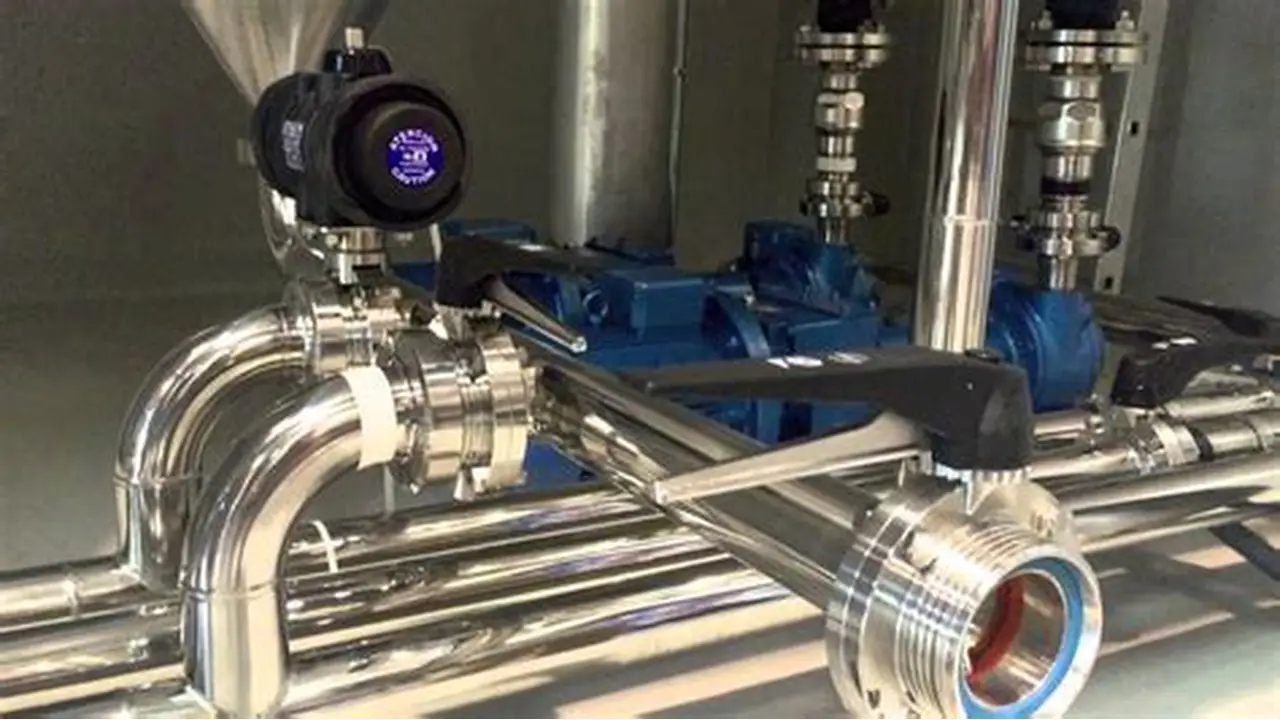
Electropolishing is the electrochemical dissolution of a metal workpiece in an electrolyte bath to remove surface material, reduce roughness, and create a bright, passive finish.
Think of it as the opposite of electroplating:
● Electroplating: Workpiece is cathode ($-$) → Metal ions from solution plate onto the surface.
● Electropolishing: Workpiece is anode ($+$) → Metal atoms are oxidized and removed from the surface into solution.
2. The Key to Smoothing: The Viscous Boundary Layer
If anodic dissolution simply removed metal, it would just etch the surface. How does it smooth it? The answer lies in the viscous boundary layer, a concept central to electropolishing theory.
● Formation: As metal ions dissolve from the anode, they accumulate in the thin layer of electrolyte immediately adjacent to the workpiece surface.
● Concentration Gradient: This layer becomes highly concentrated with metal ions, increasing its viscosity and electrical resistance.
● Diffusion-Controlled Process: The rate of dissolution is no longer limited by the applied voltage or reaction kinetics, but by how fast these metal ions can diffuse away from the surface into the bulk electrolyte.
3. The Limiting Current Plateau: The “Sweet Spot”
For electropolishing to work, you must operate within a specific electrochemical regime: the limiting current plateau.
In a polarization curve (Current Density vs. Voltage), you see distinct regions:
1. Active Region (Low voltage): Current increases with voltage. General, uncontrolled etching occurs. Result: Pitting and dull finish.
2. Passive/Plateau Region (Optimum voltage): Current remains constant despite increasing voltage. The viscous layer fully controls diffusion. Result: True electropolishing, maximum smoothing, and brightening.
3. Transpassive Region (High voltage): Current surges again. Oxygen evolution and localized breakdown (pitting, gas streaking) occur. Result: Over-polishing, damage.
Operational rule: Maintain the cell voltage that keeps you firmly on the plateau.
4. Practical Process Parameters & Pitfalls
To achieve the “deep dive” result in practice, control these variables:
● Temperature: Increases diffusion rate, thins the viscous layer. Must be held constant ($\pm 2^\circ C$). Too hot → etching. Too cold → high voltage needed, streaking.
● Current Density: Typically 10–50 A/$dm^2$. Dictated by part geometry. Lower for delicate parts.
● Time: 2–10 minutes typical. Longer is not always better; over-polishing can cause pitting.
● Cathode Design: Must mirror complex part geometry to maintain uniform current distribution. “Throwing power” is poor.
Common Pitfalls & Electrochemical Root Causes:
· Gas Streaking: Localized boiling or oxygen evolution (transpassive region).
· Orange Peel / Pitting: Operating in the active region (too low voltage) or contaminated electrolyte (e.g., chlorides).
· Uneven Polishing: Poor cathode placement or inadequate agitation of bulk electrolyte (which doesn’t disturb the viscous micro-layer but refreshes the bulk concentration).
Summary: The Electrochemical Takeaway
Electropolishing is a mass-transport-limited anodic dissolution process. The smooth finish is not achieved by “burning away” peaks but by establishing a stable, resistive viscous boundary layer that naturally creates a higher dissolution rate at protruding surface features. Operating precisely on the limiting current plateau, with a tailored acid electrolyte, produces a surface that is smoother, cleaner, and more passive than any mechanical alternative.
Post time: Apr-09-2026