

When specifying stainless steel tubing for high-purity or critical applications, the choice between BA (Bright Annealed) and EP (Electropolished) tubes is fundamental. The decision hinges on the required level of surface cleanliness, corrosion resistance, and your budget.
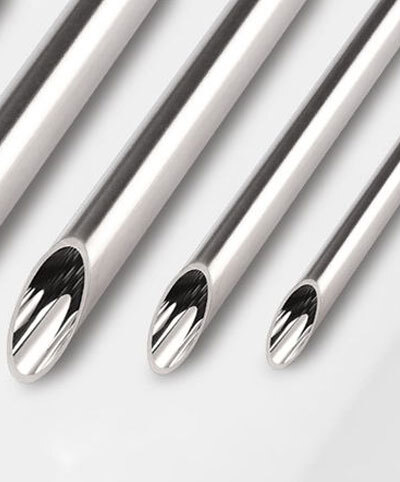
· BA (Bright Annealed) Tube: This tubing undergoes a controlled-atmosphere heat treatment (typically in hydrogen) to prevent oxidation, resulting in a clean, reflective, and oxide-free surface. It serves as the base material for EP tubing.
· EP (Electropolished) Tube: This is a BA tube that has undergone a secondary electrochemical process. The tube is submerged in an acid bath and subjected to an electrical current, which selectively dissolves microscopic high points (peaks) on the metal surface. This creates an ultra-smooth, mirror-like finish and enriches the surface with a chromium-rich passive layer.
The key metric for surface finish is Ra (Roughness Average), which measures the average of microscopic peaks and valleys on a surface. Lower Ra values indicate a smoother surface.
| Parameter | BA (Bright Annealed) Tube | EP (Electropolished) Tube |
|---|---|---|
| Surface Appearance | Bright, reflective, smooth | Mirror-like, flawless |
| Typical Internal Ra | 0.4 – 0.8 µm (16 – 32 µin) | 0.13 – 0.25 µm (5 – 10 µin) |
| Best Achievable Ra | ~0.2 – 0.4 µm | ≤ 0.13 µm (5 µin) or lower |
| Surface Topography | Retains microscopic peaks, valleys, and grain boundaries | Microscopically planar with significantly reduced surface area |
While a lower Ra generally indicates a smoother surface, the topography also matters. An EP surface with an Ra of 0.32 µm can have a lower maximum peak-to-valley deviation than a cold-drawn tube with a lower Ra of 0.12 µm, making the EP surface more consistently cleanable.
· Choose EP for ultra-high purity (UHP) applications. The electrochemical process removes embedded contaminants, creates a chromium-rich passive layer, and minimizes particle adhesion and bacterial growth. It is the standard for semiconductor critical process lines, pharmaceutical sterile fluid transfer, and UHV systems.
· Choose BA for high-purity but not ultra-high-purity applications. It offers excellent cleanliness at a lower cost and is suitable for general gas distribution, utility sections, and food & beverage processes.
· EP tubing provides superior corrosion resistance. The electropolishing process enriches the surface with chromium, forming a thicker, more robust passive layer that better resists pitting and attack from corrosive chemicals.
· BA tubing offers good, inherent corrosion resistance by preserving the alloy’s original composition, but it lacks the enhanced protective layer of an EP surface.
· BA tubing is more cost-effective. Its production process is simpler, with a shorter cycle, making it 30%–50% less expensive than EP tubing.
· EP tubing is a premium product due to the additional, complex electrochemical processing step.
· Semiconductor Industry: For gases requiring total impurity control ≤ 1.0×10⁻⁶, SS316L-EP is mandatory. For inert or non-critical gases, BA tubes are sufficient.
· Pharmaceutical & Biotech: EP is preferred for sterile fluid transfer and bioreactors to prevent contamination and ensure cleanability.
· Food & Beverage: BA tubes are widely used for dairy, brewing, and beverage transfer lines, offering a good balance of hygiene, corrosion resistance, and cost.
In essence, EP tubing is the premium choice for the most demanding ultra-high purity, sterility, and corrosion resistance requirements. BA tubing is a high-quality, cost-effective solution for high-purity applications where the absolute lowest Ra and maximum corrosion resistance are not critical.
Post time: Sep-15-2026